
Operation Eastern Sentry, The NATO Response and Your Defence
- Nov 8, 2025
- 5 min read
What is Operation Eastern Sentry & What Is Its Purpose?
In the early hours of September 9th 2025, 19 Russian drones entered Polish airspace via Belarus and the contested skies of Ukraine. These drones, known in the defence sector as UAVs (Unmanned Aerial Vehicles), were launched from Russian and Belarusian territory. Once entering Polish airspace a number of these drones were intercepted by NATO units consisting of German owned Patriot SAMs (Surface to Air Missile) systems, Dutch F-35, and Polish F-16 fighter jets. These units were supported by NATO ground radar, Italian AWACS (Airborne Warning And Control System) aircraft, as well as a Belgium aerial tanker. As a result of NATO’s efforts, the Russian drones were downed over Poland with some being shot down, and others crashing into buildings or terrain and being completely lost by radar. Russian drones went as far as Olesno, located in the north of Poland near Gdansk, Rabiany, which is east of Poland’s capital of Warsaw.
The cause of the violations is simple, but the purpose is disputed. From Poland and NATO’s perspective, the Russian drones had the purpose of testing the political resolve and response, as well as the military capability located on NATO’s eastern flank. The Russian government has yet to respond as to why its drones crossed borders. Belarus reportedly warned Poland about the incoming drones, but the Polish government has yet to confirm this.
Russia and Belarus launching drones into Poland enables Russian forces to study what type of air defences are within Poland as well as how they are used against certain forces, such as UAVs. Being able to see the response time between the drones being detected, identified, and intercepted, information that Russia can use against NATO equipment that may not already be in Ukraine. Financially speaking, this works for Russia. Drones are a low cost, low use equipment that can quickly be replaced. Whilst taking out drones with aircraft or land based equipment is much more expensive, at least with what NATO is equipped with. More importantly there is the lack of a human cost, without Russian airmen being shot down over NATO territory and being captured or killed. Politically, these violations are not expensive for Russia. Being able to use a simple excuse of equipment failure.
Poland and NATO’s responses are more expensive and come at a higher political cost. To intercept Russia’s drones comes with launching surface or air to air missiles as well as launching interception aircraft. These all come at a high cost compared to using drones, the response for keeping independent over Polish and NATO skies overall requires a high cost. Politically there comes the issue of making the population aware that a nation currently at war has launched vehicles used in war towards their homes and places of work, this makes the population uncomfortable with knowing that they one day come under attack from the air or to a possible ground invasion, either way people become more aware of something strongly negative. This feeling is then attributed to failure of Polish government policy, anger towards the Russian government or both. This damages the image of the current Polish government and decreases their chances of winning the next election. Regardless of how the drones enter Polish airspace, there are 3 choices that can be taken. The first would be to do nothing. Watch as drones of a hostile nation violate your airspace and hope nothing happens. This comes with issues domestically. The second would be to shoot down the drones, whilst this does come with military expenses as well as the possibility of casualties on the ground, it is a show of determination and force, showing the willingness to protect one’s airspace. Thirdly would be to send long range weapons to Ukraine, these weapons would then be used to attack the main source of these drones, that being the factories that produce them. By reducing the amount of drones that Russia is able to place into service would mean that their use would be reduced and their availability would become more precious. This would make Russian drones focus more on Ukraine, which is currently suffering large Russian attacks already, but it could potentially get rid of the drone violation issues for Poland.
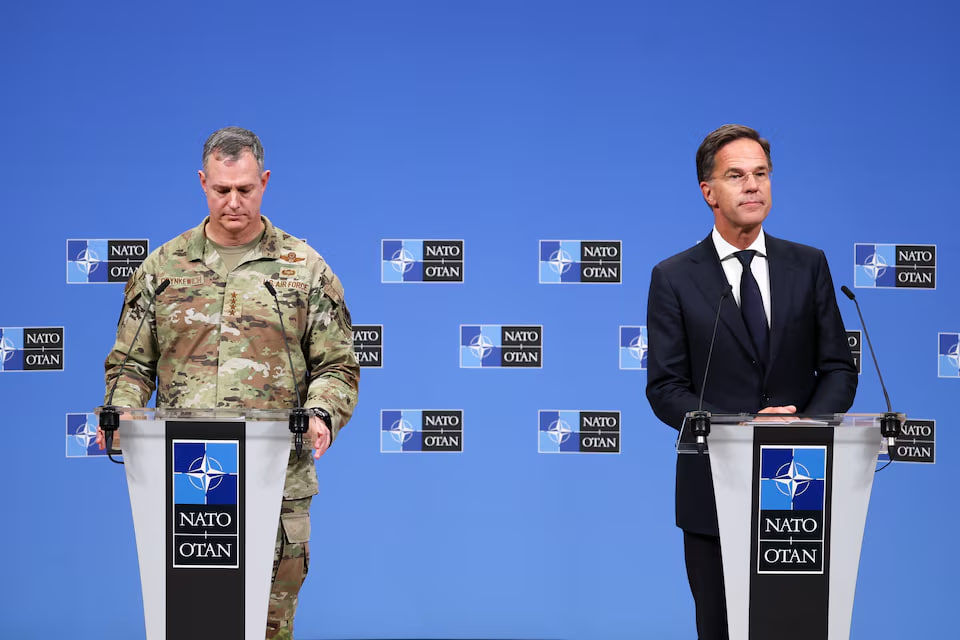
So what is “Operation Eastern Sentry”? This is the response towards Russia’s violations of Polish territory. Easter Sentry is the movement of NATO forces consisting of sea, land and air units that are capable of detecting and intercepting Russian units that cross the border. The units that are being used in the operation consist of aircraft such as fighter jets from France, Germany, Denmark, Italy, Romania and the UK (United Kingdom). The UK is also providing air to air refueling aircraft whilst Czechia has provided helicopters. As for naval forces, there is only a Danish anti-air frigate. A number of unknown ground forces have also been moved to take place in the operation. The operating zone for Eastern Sentry is on NATO’s borders with Russia in the Baltic and those who border Belarus (Estonia, Latvia, Lithuania and Poland). The operation is led by Supreme Allied Commander General Alexus G. Grynkewich from the US (United States). Apart of the operation is the introduction of a no fly zone over the skies around Kaliningrad (A Russian exclave between Poland and Lithuania) as well as the skies between Poland and Ukraine, extending past Belarus all the way to the Russian Estonian border. Whilst the operation has no official end date, it is possible that it may end at the point NATO deems it unlikely that Russia violates NATO airspace again. (Which seems unlikely, as of writing this article on 19/09/2025 3 Russian Mig-31 fighter jets violated Estonian airspace, 1 Mig-31 violated Polish maritime airspace. Not mentioning the drones which entered Poland and Romania on the 10th).
Whilst it is unlikely that these violations of national sovereignty will result in armed conflict, it is important to note that interception in future cases may not necessarily mean shooting down UAVs or aircraft, but possibly tracking them or shadowing them with air units (this is when helicopters or jets closely fly next to or behind target). Time will tell what the reactions of the public who have to deal with the scrambling of NATO forces are, or the statements that may eventually be released by the Kremlin. Regardless of what happened, NATO forces will be there to respond to any type of threat that the alliance faces.
This article is from my personal perspective on the political and security situation currently unfolding in Eastern Europe. At the time of submission, other events have unfolded on NATO’s eastern flank (such as NATO IV(4) meetings taking place due to Russian aircraft violating Estonian and Polish airspace) that could potentially be covered in future articles.


Comments